
Can a Shower Valve Be Serviced Without Opening the Wall?
With the right valve, yes. A universal rough-in valve body is designed so the working parts and the visible trim are replaced from the front of the wall, not by cutting it open. That decision is made at rough-in, years before anybody needs it, and it is very difficult to reverse afterward.
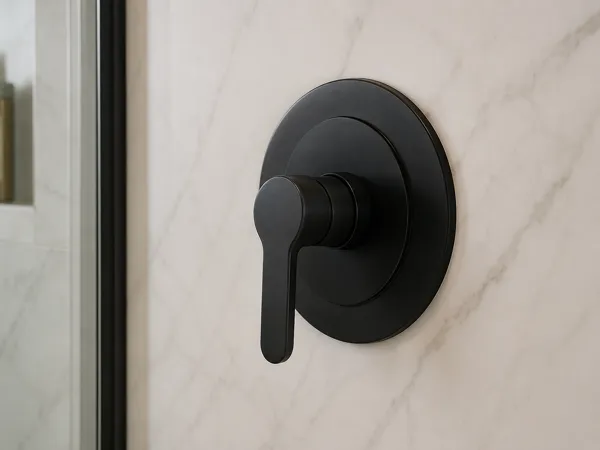
The valve is the part of a shower nobody thinks about until something drips or the finish looks dated. By then the wall is closed, and what you can do about it was decided long before.
What is a universal valve platform?
One rough-in valve body goes into the wall, and the trim — the handle, the escutcheon, the showerhead, the finish — is chosen separately and fits that same body. Delta’s MultiChoice universal valve is the platform we install, and Delta states the compatibility in its own words: “Any 13, 14, 17, or 17T series trim kit that Delta currently makes will work with this rough-in valve.”
So in twelve years, when the finish is dated or somebody wants a different handle, that is a trim swap. Not a demolition. Nobody opens the wall.
What can actually be replaced from the front?
The components that wear or fail — the cartridge and the working parts of the valve — are serviced from the front of the valve body. Individual parts are orderable rather than the whole assembly, which matters a decade later when the question is whether a repair is even possible.
Why does this get decided at rough-in?
Because the valve body is what sits inside the framing. Everything downstream of it — whether a future repair is a ten-minute job or a tile-out — follows from which body was installed. It is the least visible decision in the bathroom and one of the few that is genuinely hard to undo.
There is a related benefit while the wall is still open: the valve can be pressure-tested before anything is covered, with nothing inside it to damage. A leak found on rough-in day is a short fix. The same leak found after the walls are finished is a demolition.
Does the valve do anything for comfort?
Yes, and it is the function most people actually notice. Delta publishes that its tub and shower faucets are engineered to keep the water temperature within a safe ±3.6 °F. That is a pressure-balance function, and it lives in the valve, not in the handle.
In practice it means somebody can flush a toilet on the other side of the house without the shower spiking.
What does a cheaper valve cost you later?
A cheaper valve is usually tied to one trim line. When that cartridge is discontinued in nine years, or the homeowner simply wants a different look, the answer becomes opening the wall. The cheap valve is cheaper on the day, and that is the pattern in most of these decisions.
Our Warranty
Lifetime warranty covering plumbing, wall systems, fixtures, shower pan, doors and installation. Transferable to a new owner, backed by RenewItHQ, documented in writing. Only exclusion is customer damage.
The question worth asking
Before the wall closes, ask which valve body is going in and whether its trim and cartridge are replaceable from the front. It is a short question, and the answer decides what your options are a decade from now.
Talk It Through in Your Own Bathroom
We look at the space, answer the questions this guide raised, and explain the options that fit your home.

Ready When You Are